Category Archives: Uncategorized

Rules of the Internet and their Applicability to the Publishing Industry

Anil Dash has posted, with equal parts humor and insight, the 10 Rules of the Internet. I suspect many readers will be most amused by rule #1:

1. Given enough time, any object which can generate musical notes will be used to play the Super Mario Brothers theme on YouTube.

But I linked to it for rule #8:

8. When a company or industry is facing changes to its business due to technology, it will argue against the need for change based on the moral importance of its work, rather than trying to understand the social underpinnings.

When I first read “industry is facing changes to its business due to technology,” I immediately thought of the publishing industry (and then higher education). The next part of the rule – “it will argue against the need for change based on the moral importance of its work” – reminded me of 1) James Patterson’s ‘Who Will Save Books’ editorial and 2) the sometimes emotional responses of editors and publishers when asked some variation of the question “What do you still have to offer for your huge cut/why should anyone go with traditional publishing?”

Taking a bit longer to consider both, I’m not sure either is directly applicable. I’m not sure Patterson’s concern is valid, and I’m suspect that some of the emotion in the above referenced responses stem from concerns about being able to make a living and to have a feeling of worth about what one does. But I do continue to wonder whether rule #8 can be either descriptive of some what is going on in publishing or perhaps even helpful in thinking about the future of publishing.

Leave a comment

Filed under Uncategorized

EFF’s Take on Comic-Con

EFF-logoThe Electronic Frontier Foundation (EFF) is a non-profit policy and legal advocacy group focused on online rights. From their About page:

From the Internet to the iPod, technologies are transforming our society and empowering us as speakers, citizens, creators, and consumers. When our freedoms in the networked world come under attack, the Electronic Frontier Foundation (EFF) is the first line of defense. EFF broke new ground when it was founded in 1990—well before the Internet was on most people’s radar—and continues to confront cutting-edge issues defending free speech, privacy, innovation, and consumer rights today. From the beginning, EFF has championed the public interest in every critical battle affecting digital rights.

They had a different take on the San Diego Comic-Con, from the new game Watch_Dogs to cunning Jayne hats:

Shambling along the mobbed exhibition hall floor at San Diego Comic-Con, I spotted a familiar t-shirt at a booth. Wearing it was Patrick Race, an Alaskan computer-science major who founded the web-comic and short-film outfit,Alaska Robotics. What struck me, like Thor’s hammer to the noggin, was that while so many Comic-Con fans spend hours crafting intricate superhero costumes or picking out witty T-shirts riffing on entertainment franchises, Patrick was proclaiming his passion for digital civil liberties and supporting the organization that fights to protect them.


Leave a comment

Filed under Uncategorized

Faulkner Quote in Movie is Fair Use, But . . .

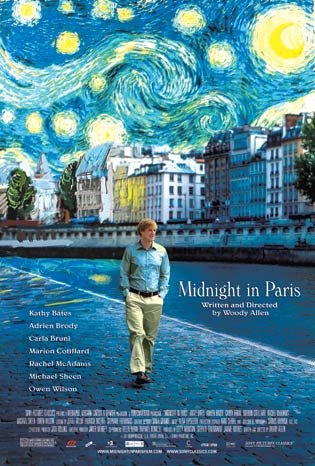
Owen Wilson in a movie without Ben Stiller???

Owen Wilson in a movie without Ben Stiller???

Chief Judge Michael Mills (District Court, Northern District of Mississippi) ruled that the use in the movie Midnight in Paris of a 9 word quote from the Faulkner novel Requiem for a Nun did not expose Sony Pictures to liability on any federal claims. (Hollywood Reporter)

The ruling (which you can read here) concluded that (1) the quote met the standard for fair use and (2) the quote did not create confusion as to any affiliation between the Faulkner estate and the movie. From a legal point of view, the most interesting aspect of the opinion is that the judge collapsed two arguments related to the question of whether the use infringed ((1) the substantial similarity of the movie and the novel and (2) the de minimis nature of the use) into the fair use analysis. It’s odd since fair use is an affirmative defense that only needs to be addressed if infringement is first shown. Here the judge skipped infringement main course and went straight to the fair use dessert.

But that is not why I’m posting it for you. I’m posting it to make an entirely different point.

You see, if you had walked into my office and told me you wanted to use a 9 word quote from a 220 page novel along with attribution of the source and then asked if that would be copyright infringement, I would have said, “No. It is not copyright infringement, and it is very clearly fair use even if it is infringing.”

But hopefully, I would have said more and you would have carried your decisions making process further than that.

Here’s the rub. Even though it appears to be a clear winner in court – you might STILL HAVE TO GO TO COURT.

Notice that someone was sued. Lawyers were involved. We got an actual written decision. All of that costs time and money. This case was decided on a 12(b)(6) motion to dismiss – which is very early in the civil process. Even so, getting that far would easily cost you a sum well into five figures.

The take-away is that whether something will make you liable is not always the most important question; often, the most important question is whether something will get you sued.

2 Comments

Filed under Uncategorized

The Lawyer Did It – or – Loose Lips Sink Pseudonyms

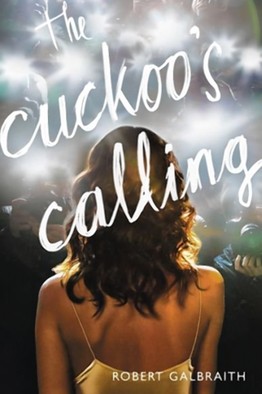
That's RK Galbraith to you.

That’s RK Galbraith to you.

The Guardian reported today that a lawyer, or solicitor in British terms, was responsible for the leaking of JK Rowling’s secret pseudonym (Robert Galbraith). The lawyer let his wife’s best friend in on the secret, a secret exceedingly few people knew. That friend in turn was the person who first tweeted Rowling’s secret. The lawyer and firm contacted Rowling’s agent as soon as they realized the pseudonym had been unmasked and apologized.

In the United States, lawyers have a very strong duty of confidentiality that covers any information that relates to the representation, and I assume that British solicitors have a very similar duty. In fact, the tradition of confidentiality is so strong that it is a very significant part of most attorney’s self-image.

In the US, such a revelation could expose the offending lawyer to both professional discipline (up to losing their license to practice law) and malpractice liability. The breach of the ethical duty creates a slam dunk case for the breach of care that triggers civil liability in a legal malpractice case. So, in this particular case, proving liability would not be difficult. What would be difficult would be proving damages, after all Rowling’s sales actually increased after the breach of confidence. So, if this had happened in the US, she might win a malpractice case against the attorney but be awarded nominal damages (e.g. $1).

I teach professional responsibility and ethics to baby lawyers (i.e. law students). I try to stress to them that damaging breaches in confidentiality are often the confluence of seemingly innocuous conversations and bad luck; rarely is it  dastardly conduct.

2 Comments

Filed under Uncategorized

Shirtless Writers

A friend shared an article from Open Culture about a shirtless Mark Twain, complete with a bonus link to a gallery of a shirtless Hemingway. Aside from providing these for your viewing pleasure (?), I’ll just point out a few things from the article itself.

1. Note how the article discusses how consciously Twain constructed his public image. Given current technology and current technological practices, that seems both easier and harder for writers today. It is easier in that a writer can reach the public directly with minimal effort. It is harder in that a writer’s every comment (whether thought through or not) has the possibility of being passed around (think viral kerfuffle).

2. Also note that Twain’s public image of the white suit came from a photograph taken when he was testifying before a Congressional committee about copyright in 1906. This would have been a very important time. The then applicable copyright statute was over one hundred years old and in the process of being rewritten.* Three years later, we got the Copyright Act of 1909, which governed until the the Copyright Act of 1976 became effective on January 1, 1978. The multi-year process for passing the act should not be a surprise. The 1976 act was under discussion for more than a decade before finally passing. The influence that prominent writers can bring to bear should not be surprising either. Testimony of authors and artists before Congressional committees is not uncommon.

3. I refuse to be dragged into a discussion of whether New York Times Bestselling author Kevin J. Anderson removed his shirt on a panel at DragonCon last year.

* Major revisions were enacted in 1831 and 1870. Each year between the 1790 Act and the end of Nineteenth Century, an average of two copyright bills were introduced in Congress.

Leave a comment

Filed under Uncategorized

United States vs. Apple (and the Big Six, I mean Five)

I’m not going to go into any depth on the Apple ruling. It wasn’t really a close case or even an interesting bit of law. Just straight-forward collusion on price fixing. I do however have a few comments and recommendations.

Don't worry. I'm not going to let the motto drag me into another Latin discussion.

Don’t worry. I’m not going to let the motto drag me into another Latin discussion.

First of all, I recommend that you read the fact section of the opinion. You can find it, and just about everything else involved with the case if you have a couple of days to kill, on the DOJ website here. Look for “Opinion & Order.” The factual portion is written in narrative form and is pretty accessible to anyone. The reason I recommend reading it is it gives you a glimpse into the business and minds of big publishers. Read it to get a glimpse at the motives of the publishers in all of this. And I’m not trying to imply judgment of those motives, just that seeing through their eyes is interesting.

Let me add one caveat though. This was written by a judge as findings of fact – to support the conclusions of law. In other words, it has a slant – to make the legal conclusions look obvious.

If you want a quick summary, take a look at Professor James Grimmelmann’s post. He correctly points out what many flew past – that the publishers’ motives were not just about setting higher price expectations, but also about protecting the physical retail sector (that is their last trump card in the whole thing we call book publishing).

The Atlantic breaks it down into “6 bullet points.” While the article does provide a quick summary, it’s a bit light on Amazon an a bit heavy on Apple. For example, it states “Amazon was actually losing money on ebook sales, but it didn’t care. The long-term goal was to get people to buy Kindle e-readers.” Selling more Kindles may be a goal for Amazon, but in the long-term, selling more Kindles is just a means toward accomplishing its true goals (e.g. locking customers into Amazon through hardware-DRM combinations).

Later, the article refers to “Apple’s plan to raise ebook prices overall” which I think is a little unfair in its characterization of Apple’s goals. Apple did not just decide one day that eBook prices needed to be higher. Apple wanted to open an eBook store to help sell iPads, and Apple wanted to make money off eBook sales in that store. Giving publishers a way to accomplish their goals – which was to raise eBook prices – was simply Apple’s quickest option to get the publishers on board and its iBookstore off the ground. I’m not saying their actions were not illegal. I’m just saying that raising eBook prices was not their “plan.”

The article does a good job overall and  provide an excellent summary of the publishers’ thinking processes:

With Amazon’s aggressive pricing, the publishers reasoned, the Internet company might grow so powerful as to be able to drive down prices for all books, even the hardcovers sold in mom-and-pop stores. Amazon might even begin to negotiate directly with authors and cut out the publishing houses altogether.

For a slightly different take on the ruling, see this Forbes article describing the potential downsides for the industry and consumers.

2 Comments

Filed under Uncategorized

The First Sale Doctrine: History through Today

One of the current controversies that I want to explore in this blog is the resale of eBooks.

Calm down, everyone. Go to your happy place.

Better?

OK, I’m not going to discuss eBook resale directly in this post; instead, I want to lay some of the groundwork for that discussion by providing some basic information about copyright’s first sale doctrine.

If you purchase a BluRay of the Firefly TV series and then give it a friend,* are you a copyright infringer? Is the owner of Redbox a copyright infringer for renting a BluRay disc of The Avengers? What about the proprietor of a used bookstore, or a customer of the same?

Intuitively, you probably know the answer to all of those questions is no. The first sale doctrine is the reason the each of those commonplace activities is not an act of copyright infringement.

A publisher, a department store, and a castaway

Hallie Erminie Rives in a kimono. I don't know why she is in a kimono.

Hallie Erminie Rives in a kimono. I don’t know why she is in a kimono.

At the beginning of the 20th century, Hallie Erminie Rives was a best-selling author as well as being a daughter from one of the oldest families in America and the wife of a prominent diplomat. Her books included Satan Sanderson, The Kingdom of Slender Swords, and The Valiants of Virginia, as well as Smoking Flax, controversial even when published in 1897 for its positive portrayal of a lynching. One of her other novels, The Castaway, was at the center of Bobbs-Merrill Co. v. Strauss et al., doing business as R.H. Macy & Co., the 1908 Supreme Court case that first established the first sale doctrine in the United States.
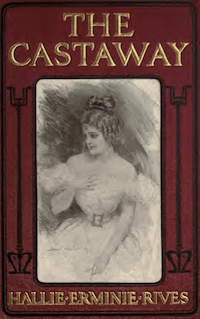
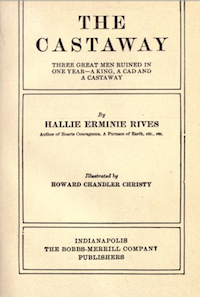
The original cover. Since the book sells itself about being three men whose lives are ruined, I'm not sure why there is a woman on the cover. Unless it's her fault that ... OK, I'm not going there.

The original cover. Since the book sells itself as telling the story of three men whose lives are ruined, I’m not sure why there is a woman on the cover. Unless it’s her fault that … OK, I’m not going there.

As an aside, the copyright in The Castaway expired a long time ago, meaning it is now in the public domain. That means, among other things, that you can probably find a lot of presses you’ve never heard of offering it for sale on Amazon. Of course, you can also find it available for free here if you want to take a look.

Now, back to the history of the first sale doctrine. OK, maybe not just yet. In the past few days, we’ve all been reading about the Apple decision and the attempts of big publishers to control prices, more specifically about publishers trying to find some way to force Amazon higher than their $9.99 price point for eBooks. Well, I’m sure you didn’t think that was the first time publishers tried to control the prices of their books. The underlying facts in Bobbs-Merrill v. Strauss were strikingly similar at least with respect to each party’s goals. The publisher Bobbs-Merrill wanted to maintain a price point of $1 while the department store Macy’s wanted drive foot traffic to its store by offering popular books at below market prices. Sound familiar?

In an attempt to keep the retail price of its books at a high level, Bobbs-Merrill printed the following just below the copyright notice in The Castaway:

The price of this book at retail is one dollar net. No dealer is licensed to sell it at a lower price, and a sale at a lower price will be treated as an infringement of the copyright.

A Cad? Not sure whether that word choice is less than timeless or AWESOME

A Cad? Not sure whether that word choice is less than timeless or AWESOME

Macy’s purchased the book wholesale and resold them for 89 cents. Bobbs-Merrill in turn sued them for copyright infringement.  Bobbs-Merrill did not allege that Macy’s had copied the book, but rather they alleged that Macy’s had infringed their “right to vend” the copyrighted work.

Most people think of copying when they think of copyright, and certainly the right to exclude others from making unauthorized reproductions is the central right granted to copyright holders. However, there are other rights. The Copyright Act of 1790, the applicable law in 1908, also included the “right to vend” the copyrighted work. The Copyright Act of 1976, the currently applicable copyright law, words this right as the exclusive right to distribute copies of the work.

The Supreme Court rejected Bobbs-Merrill’s argument that Macy’s resale of the book for les than the price specified constituted infringement of the copyright. Instead, they said that the right to vend granted by the copyright statute did not include the right to control resale of copies of the work after those copies were initially sold by the publisher. Note that the Court was explicit about its holding being an interpretation of the Copyright statute and not involving any claim of a contractual obligation created by the language printed in the book or otherwise.
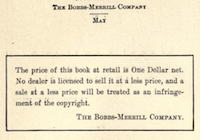
This didn't work.

This didn’t work.

The first sale doctrine today

A year later, the Supreme Court’s holding was codified into the Copyright Act of 1909. The Copyright Act of 1976 also included what became known as the first sale doctrine in section 109:

Notwithstanding the provisions of section 106(3), the owner of a particular copy or phonorecord lawfully made under this title, or any person authorized by such owner, is entitled, without the authority of the copyright owner, to sell or otherwise dispose of the possession of that copy or phonorecord. [106(3) provides for the right of distribution.]

The statute, through later amendments, places some very interesting limitations on the first sale doctrine, as do later cases, particularly those involving shrink-wrap licenses on software. However, I will leave those for later discussions.

The first sale doctrine is often referred to as a doctrine of exhaustion – as in, the copyright holder’s rights in that particular copy are exhausted by the first sale. Another way to think of the first sale doctrine is to think of it as a balancing between two sets of property rights. The copyright owner holds one set of property rights, the copyright rights. The owner of an individual copy of a work holds the other set of property rights, the personal property rights in the physical object itself.

Remember that copyright law and the statute explicitly distinguish between the copyrighted work of authorship (an intangible) and a particular embodiment of that work (a tangible book, disc, print, etc,). The statute, in an apparent attempt to make the wording as confusing as possible, calls these embodiments “copies.” Except in the case of music, which for historical reasons the statute refers to as phonorecords. Don’t get me started on music copyright, the parachute pants of the copyright world.

So the owner of a physical object has personal property rights in that object. Just as copyright gives you a bundle of rights, so too personal property gives you a bundle of rights. One of those rights is the right of alienation. Now, that doesn’t involve bald aliens who get drunk on sour milk. The right of alienation basically means that the owner of property has the right to transfer the property rights to someone else.

So the conflict, and the need for balancing, then comes from the copyright holder’s exclusive right of distribution and the copy owner’s personal property right to alienate the copy. Section 109 and the first sale doctrine resolve that conflict. The copyright holder does have the exclusive right to distribute any copies of the work, but once the copyright holder has parted ways with a particular copy, the right of distribution no longer applies to that particular copy. The distribution right is exhausted by the first sale. Note that even though we call it the first ‘sale’ doctrine, the relevant distribution is any transfer of ownership whether it is a sale or a gift.

That’s the first sale doctrine in a nutshell. Hopefully, that will provide a foundation for later discussions of whether the first sale doctrine applies to virtual objects, such as eBooks.

*One of the greatest things a friend can do, by the way.

1 Comment

Filed under Uncategorized

Lex scriptoria

Lex mercatoria → lex scriptoria → this blog

What is lex scriptoria? It’s Latin for “the law of writers” and is my conception of what this blog is about. I created it to be evocative of the well-known phrase lex mercatoria. OK, well known if you are a legal historian. All right, a legal historian interested in medieval commercial law.

lex mercatoriaLex mercatoria refers to a body of customs and rules that were developed by merchants during medieval times. It  is Latin for the  “law of merchants”.  Lex mercatoria served as an international set of laws enforced by tribunals of merchants separate from either governmental or ecclesiastical courts of the day. It declined as stronger national systems, including national commercial codes, arose in the late medieval period, but the national codes were often adapted from lex mercatoria, and courts still looked to lex mercatoria in commercial disputes. It eventually came to be used as a general term for commercial law itself.

So, for me, lex scriptoria describes a subset of law and custom. It is all the law relevant to writers as well as the customs, or practices, of those in the business of writing. While lex scriptoria includes actual law – statutes and cases – note that it also includes the practices of those in and around the world of writers.

In the law plus practices formulation, I bring expertise in the former and an interest in the latter. I hope that his blog serves a useful device for exploring both.

I plan to focus both on newsworthy issues as they arise and on the general background of law that writers might want to know. My hope in doing so is that this blog will serve both to explore and to elucidate lex scriptoria.

First warning. You should stop reading.

OK, you should probably stop reading now, as I continue to discuss my choice of lex scriptoria. Seriously, we’re going to dip down into the Latin.

In attempting to come up with the writer equivalent of lex mercatoria, I debated whether to use the latin base word scriptor or the base word auctor. Scriptor is most commonly translated as “writer” and auctor as “author”.

St. Bonaventure, a thirteenth century Franciscan monk, distinguished the words in this way:

There are four ways of making a book. Sometimes a man writes others’ words, adding nothing and changing nothing; and he is simply called a scribe [scriptor]. Sometimes a man writes others’ words, putting together passages that are not his own; and he is called a compiler [compilator]. Sometimes a man writes both others’ words and his own, but with others’ words in prime place and his own added only for purposes of clarification; and he is called not an author but a commentator [commentator]. Sometimes a man writes both his own words and others’, but with his own in prime place and others’ added only for purposes of confirmation; and he should be called an author [auctor].

This quote is frequently cited as quite extraordinary in how close it comes to capturing modern conceptions; however, a deeper reading of St. Bonaventure’s text reveals that his conceptions of writer and author were not as close to modern thought as this particular passage seems to convey. While the term scriptor is often equated to one who scribes, in other words as the person who literally writes things down, and auctor seems closer to author, neither term really captures the modern conception of either writer or author.

I eventually chose to use lex scriptoria instead lex auctoria for four reasons. First, I wanted a term that was closer to writer than author. Second, the Latin word auctor has a rather broad meaning and many different connotations and uses. In fact, it is more commonly used to mean “authority” or “power”. It is the source of the modern word “authority”. Third, at least one Latin scholar* I talked to said scriptor came closer to our modern conception than auctor. Finally, I just liked the sound of lex scriptoria better than lex auctoria.

Second warning. You should stop reading.

If you haven’t stopped reading by now, you really should. Don’t say I didn’t warn you.

So, having chosen to use scriptor instead of auctor, I was then left to create the correct phrase together with lex, which in case you have not deduced it yet from the context means law. So I dug back into Latin grammar. Both scriptor and auctor are third declension nouns. I decided to use the genitive case, which is fairly close to what we think of as a possessive form of nouns. This should have yielded an acceptable phrase for the “law of writers”. However, the genitive plural third declension ending is -um, yielding lex scriptorum. The problem with that construction was that the word for merchant was mercator, also a third declension noun. So why was the well known phrase lex mercatoria instead of lex mercatorum?

I eventually found the answer, confirmed by my expert*, by searching through all possible Latin endings until I found -ia listed as an adjectival form of nouns, including third declension nouns. Using the genitive/possessive was incorrect; I needed the adjectival form of the word.

Thus, lex scriptoria, the law of writers.

Just for the record, I did warn you to stop reading way back up there somewhere. You can’t blame me if you kept reading anyway.

*Dr. Gaffney, my eighth grade Latin teacher. Dr. Gaffney knows his stercore; you don’t question Dr. Gaffney.

Leave a comment

Filed under Uncategorized